
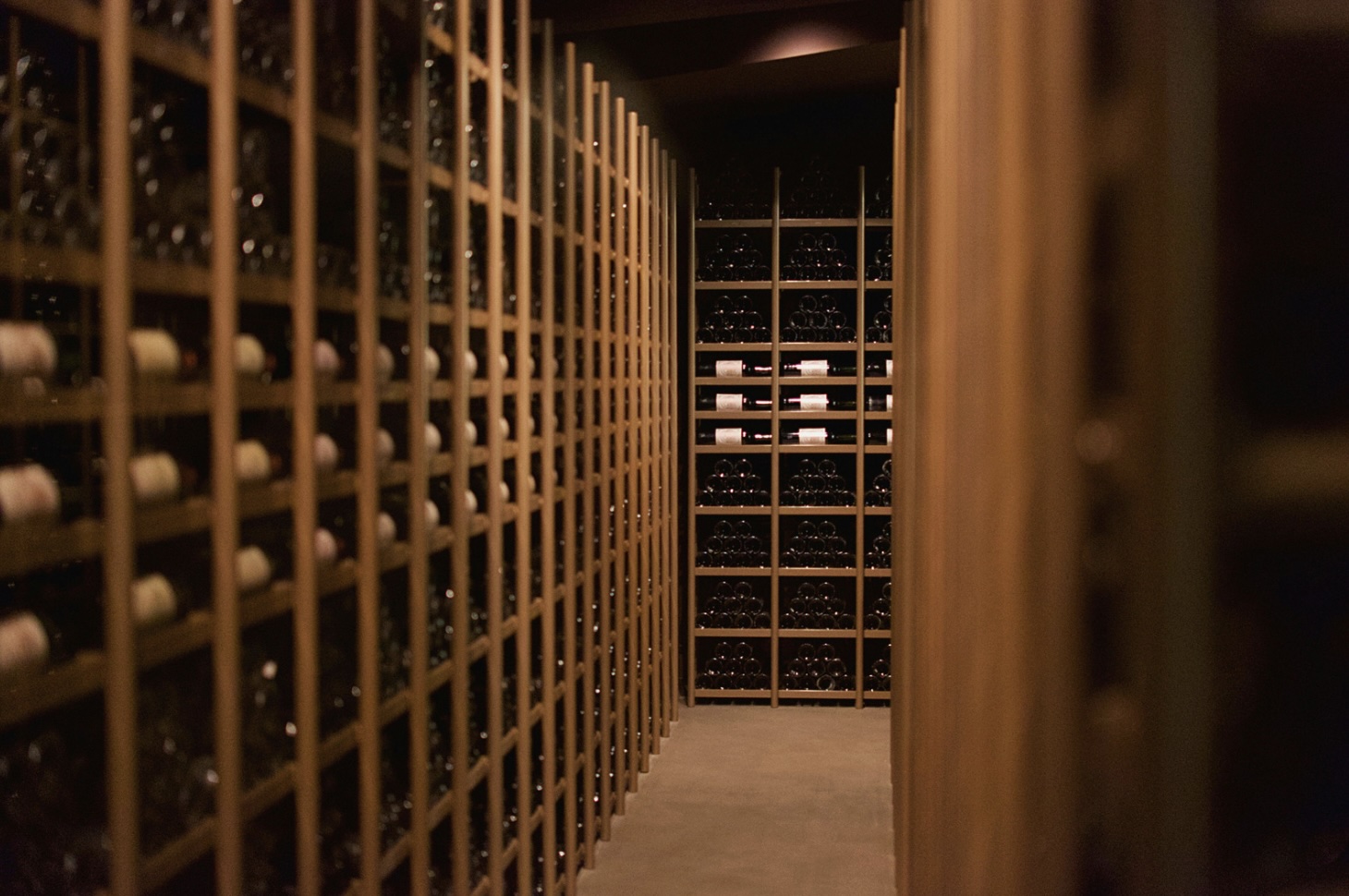
I’ve lost count of how many homes I’ve walked into where someone proudly shows me their wine setup, and within a few seconds, I know it’s not going to end well.
The rack looks great. The bottles are well chosen. The intention is clearly there.
But the environment? Completely wrong.
There’s this persistent belief that as long as wine is kept indoors and out of direct sunlight, it’s “safe.” That might hold up in parts of Europe. In Singapore, it’s wishful thinking. Between the heat and the humidity, you’re basically fast-tracking the aging process, and not in a good way.
I’ve seen bottles that should have been spectacular turn flat in under a year. Not because they were bad wines, but because they were stored badly.
The Two Things That Quietly Ruin Everything
Temperature is the first issue affecting wine in storage, and no, most homes in Singapore are far too warm for good wine storage. If your wine is stored consistently above 24°C, then your wines will be ageing dramatically and more than likely poorly. This is not to say that older wines are always better or more mature. The vast majority of wines are not aged for long periods of time and are forced to skip many of the transitional stages a wine goes through in order to reach mature age.
No, it just skips steps. And it is very likely that the wine will be ageing quickly and in a very non-typical manner for most wines. Research has shown that at temperatures above 24°C, wines lose their structure, their aromas and their nuance. And what you get is a fine wine. Maybe.
Similarly, high humidity in the storage area has an adverse effect on the wine as well. As a non-moderate society, Singapore’s humidity levels far exceed typical ideal storage conditions for wine at 60% to 70% relative humidity in wine storage facilities.
On the other hand, a very dry cellar could affect labelling over time. Moreover, corks in very dry storage areas could potentially dry out and shrink, severely affecting the amount of oxygen that the wine comes into contact with. The resulting wine will undergo oxidation far quicker than normal.
Wine Cellar: What Actually Matters (and What Doesn’t)
People tend to overcomplicate wine storage in some ways and completely ignore the basics in others.
You don’t need something extravagant. But you do need control.
Temperature stability matters more than hitting some “perfect” number. I’d take a consistent 14°C over a fluctuating 12°C any day. It’s the swings that do the damage.
Humidity needs to be kept in check, not eliminated, just managed.
And light? Yes, it matters, but it’s usually the least of your problems here. If your bottles are sitting in a bright kitchen, sure, that’s an issue. But compared to heat and humidity, it’s secondary.
The Wine Fridge Conversation (Let’s Be Honest)
This is where I tend to disappoint people.
Wine fridges aren’t useless. I recommend them all the time, for the right situations. But in Singapore, they’re often treated like a complete solution when they’re really just a partial one.
The smaller units struggle, especially if they’re placed somewhere warm. I’ve seen plenty that can’t maintain a stable temperature once the ambient conditions push back.
And then there’s the growth problem. Nobody plans to outgrow their fridge, but almost everyone does. A year in, you’re already playing Tetris with your bottles.
If you’re serious about collecting, even modestly, you’ll hit that ceiling sooner than you expect.
What I Tell Clients Who Want to Do This Properly
If you’re going to invest in wine, it makes sense to protect it. That doesn’t automatically mean building a massive cellar, but it does mean being intentional.
First thing I usually look at is the wine cellar location. External walls are a problem here, they carry heat. Internal spaces are far more stable.
Then insulation. This is where most DIY setups fall apart. Without proper insulation and vapour barriers, you’re fighting a losing battle. Your cooling system ends up working constantly, and even then, conditions drift.
And please, don’t rely on standard air conditioning. It’s not designed for this. It won’t manage humidity properly, and it won’t give you the stability you need.
Airflow is another one people overlook. You can have a good system on paper, but if the air isn’t circulating properly, you’ll get pockets of inconsistent conditions.
Even racking matters more than people think. I’ve seen cheap wood racks warp within a year here. It’s not just about looks, it affects how the whole system functions.
The Part People Only Realise Too Late
I’ve had more than one conversation with someone who opened a wine bottle they’d been saving for years… and knew immediately something was off.
That’s the thing. Wine doesn’t always fail dramatically. Sometimes it just becomes dull. Lifeless. Forgettable.
And by the time you notice, it’s too late.
If you’re holding wines that have any kind of value, financial or personal, storage isn’t a small detail. It’s the whole game.
When It Stops Being Worth DIY-ing
Heat and Insulation Challenges
Most wine collectors start out by trying to manage their wine collection themselves, setting up their own Wine Cellar. However, in Singapore with its heat and humidity, this DIY approach does not last long. The temperature in a normal air-conditioned room in Singapore is around 28-30°C, and this can fluctuate depending on outside weather. While a good wine cooling system can maintain a constant temperature for your wine in a cellar, it is equally important to consider how you plan to insulate your cellar space to minimise temperature fluctuations. Without sufficient insulation and a complete vapour barrier, the space will not function as intended.
Humidity Control Issues
Typically, wine requires high humidity levels of about 60% to 70% in its storage place in order to maintain itself optimally. AC systems in Singapore do not manage to achieve the required humidity; on the contrary, they usually tend to dry out the air to very low levels, such that the air in some hot, dry patches might have as low a humidity as 20% (RH). Such humidity could cause corks to dry out, thus allowing wines to leak out and enabling moulds to grow in the wines.
Racking Problems
As a rule, wine racks made from cheap timber are poor quality and will only last a year or so in normal humidity. As the wood warps and splits, it will form holes that allow the wine bottles to fall out of the racks. When the racks move around, there is poor airflow around the bottles, which in turn puts a huge strain on the air conditioning to try and keep the wine at the correct temperature.
Collection Growth and Space Limits
People generally underestimate the amount of space required by their wine collection. While a collector may start off with 30 to 50 wine bottles, it will easily double in size within two years. This means that that little wine fridge or wine cupboard you were thinking of building will soon be full and require additional space and ultimately more equipment, more electrical work, and more disruption to your home.
The Cost of Poor Storage
It’s your wine and once it has gone down the drain of poor storage, it can never be retrieved. This is because the chemical changes that occur to the wine as it begins to deteriorate happen very quickly at temperatures above 24°C and the swing in temperature that a cellar experiences on a daily basis can have a very detrimental effect on the aromas and the structure of a wine – even the finest of wines.
When to Install a Proper System
The time to put in a proper climate-controlled wine storage system with all the factors of load calculation, correct insulation and vapour barrier, proper cooling and humidity management, correct airflow, and proper racking made of suitable materials is before you have too much wine and, more importantly, too much invested in that wine.
What a Proper Wine Cellar Setup Actually Gives You
It’s not about showing off. A good wine room is usually pretty understated.
What it really gives you is consistency. You’re not wondering if your bottles are slowly degrading. You’re not adjusting things every few months.
It’s also built with growth in mind. Because if you stay in this hobby long enough, your collection will expand. It always does.
And honestly, it just makes the whole experience more enjoyable. You stop worrying about storage and start focusing on the wine itself.
A Bit of Perspective
Not everyone needs a dedicated wine room. I’m the first to say that.
But if you’re collecting with any kind of intention, even casually, your environment matters more than the size of your wine collection.
I’ve seen small, well-managed wine cellar setups outperform large, poorly thought-out ones every single time.
And in the end, that’s what this comes down to. You’re not just storing bottles, you’re preserving something that’s meant to be enjoyed later.
Might as well give it a fair shot.
FAQs
What is the ideal temperature for storing wine in Singapore?
Around 12 to 14°C with minimal fluctuation.
Can I use a regular air conditioner for a wine room?
No. It does not maintain humidity and can create unstable conditions.
How long can wine last without proper storage?
It varies, but quality can degrade within months in poor conditions.
Is humidity really that important in wine storage?
Yes. It affects cork integrity and prevents oxidation.
Are wine fridges sufficient for small collections?
Sometimes, but performance depends on placement and ambient conditions.
How much does a custom wine cellar cost in Singapore?
Costs vary widely based on size and complexity. Custom wine cellars in Singapore typically range from around SGD15,000 for a compact converted space to SGD80,000+ for larger residential cellars with premium finishes and high-spec cooling.